
The Last Measure of the Tide
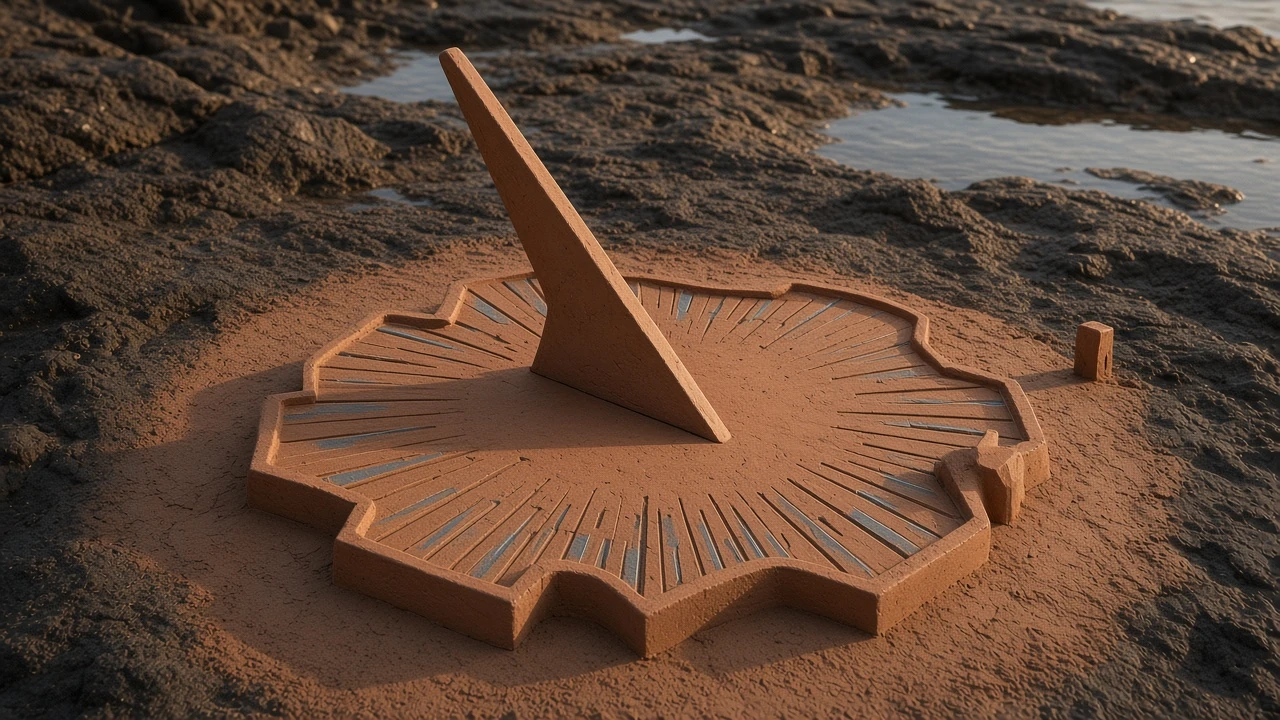
A monumental terracotta tide sundial stands on an exposed tidal flat beside a dark basalt shelf. Its broad, stepped face is incised with uneven radial channels and shallow tide marks; a tall, angular gnomon casts a long shadow that reaches a single notched marker as the low sun skims the horizon. The sculpture is viewed from a slightly elevated three-quarter angle, with a few thin pools of retreating water reflecting the sky beyond it.
Groove-fired terracotta
A tactile sculptural language built from unglazed terracotta, with scored grooves that organize form and gather grazing light. Matte clay surfaces, deliberate edge transitions, and a restrained four-color palette create a quiet balance between handmade irregularity and clear structure.
A tactile sculptural rendering of [your subject], shaped in unglazed terracotta with scored grooves, softly weathered edges, and restrained color accents; directional light grazes the incisions and reveals the clay’s matte surface.
Make it your own. Replace [your subject] with your next idea.
The artist’s signature
- 01Treat unglazed terracotta as the primary material, with a dry, matte, hand-worked surface.
- 02Use scored grooves as a consistent structural and textural language; vary their spacing and depth to describe form without clutter.
- 03Keep edges crisp where forms meet and gently worn where surfaces turn or terminate.
- 04Use directional grazing light to reveal incisions, volume, and subtle surface irregularities.
- 05Restrict color accents to the palette, keeping terracotta visually dominant.
- 06Maintain a sculptural, tactile presentation rather than a painterly or photographic finish.
Conversation 0
Share what caught your eye. Be curious, be kind.
No comments yet. Start the conversation.